What importers look for on a spice exporter's website
An importer searching for a cumin or fennel supplier is weighing risk more than price. They want to know where the seed comes from, how it is cleaned, which grades you pack and what paperwork arrives with the container. A food manufacturer adds questions about spec sheets and lab reports. A private label brand wants to know if you can fill retail pouches with its artwork.
Most exporter websites answer this with a product list and a contact form. The buyer then emails for a spec sheet, waits for a reply across time zones and asks again about documents. A better site lets the buyer check your process, grades and load sizes in one visit and send an enquiry that already names the spice, pack, container and Incoterm.
How the demo handles it
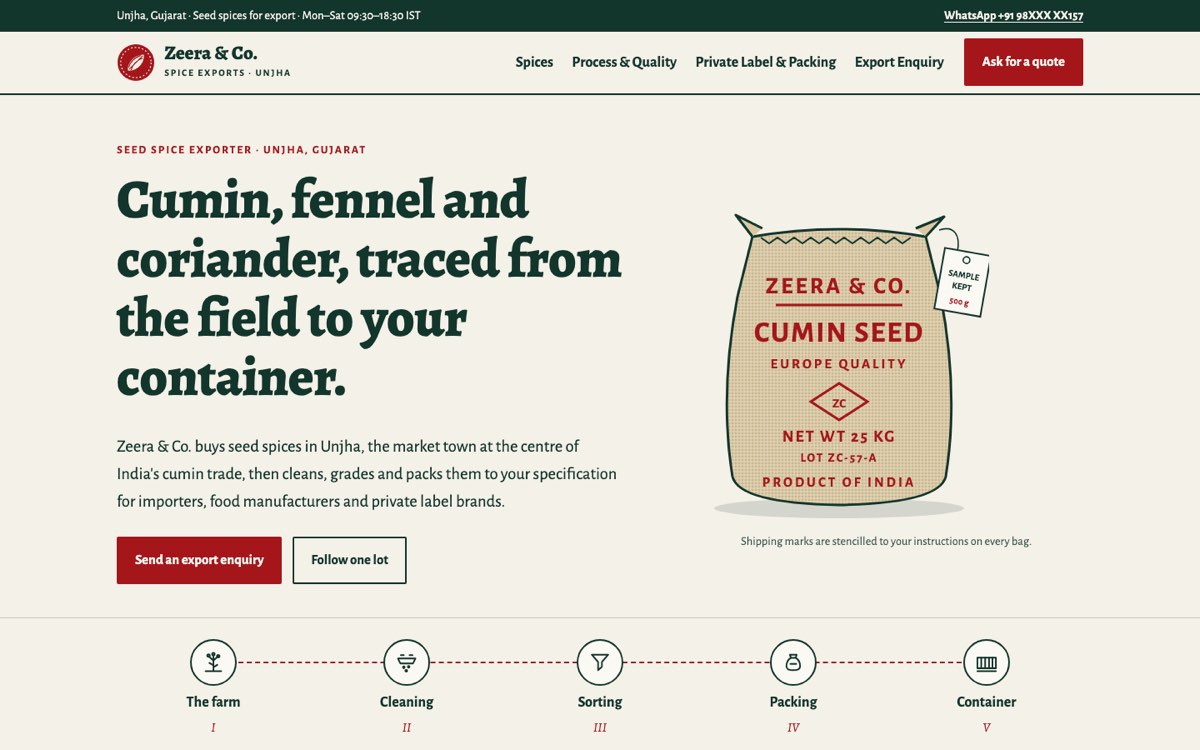
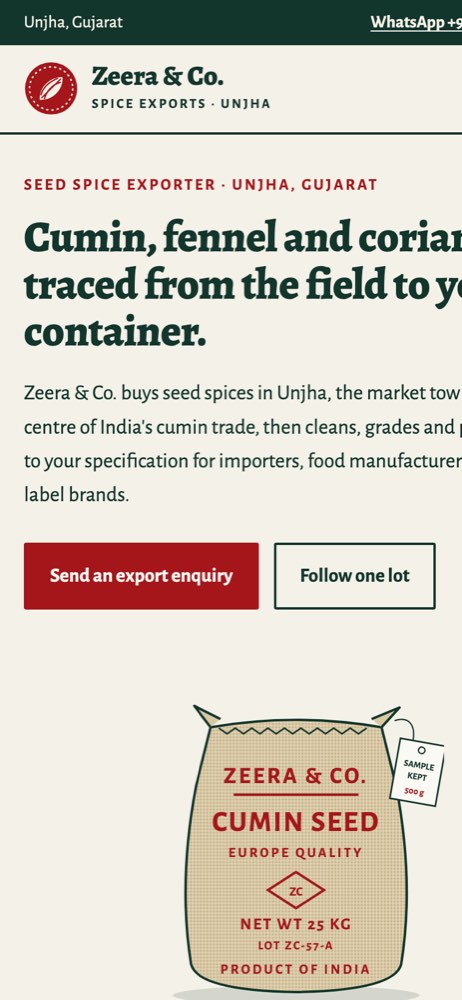
Zeera & Co. Spice Exports is a fictional business that VirtueInfo created for this demo. It is not a client. Its registration numbers are labelled placeholders, and its load figures are marked as estimates. The site is fully working, so you can follow it as an importer would.
The signature feature is on the home page. A scroll story follows one lot of cumin, lot ZC-57-A, from a north Gujarat field through machine cleaning, grading, bagging and stuffing into a container at the port. Beside it sits a lot docket that marks each stage done as the visitor scrolls. On desktop the docket is a side panel, and on phones it becomes a compact bar that stays in view. Each stage lists what is recorded, such as moisture on arrival, the 500 g sample kept back and the seal photos sent on WhatsApp. The whole story is plain HTML and drawings, so it reads fully even with JavaScript switched off.
The spices page gives a grade table for cumin, fennel, coriander, fenugreek, ajwain and dill, with local names, botanical names and typical specifications. It explains the trade grade names and adds a season planner, so buyers know when new crop arrives.
The process and quality page lists the checks a buyer can ask for, from a pre-shipment sample to inspection by their own surveyor, and the documents sent with each shipment. The private label page covers pack formats, artwork proofs and what goes on the label.
On the export enquiry page, a container load estimator takes a spice, a pack and a container size and shows an approximate net load and bag count. One button carries those choices into the enquiry form, which also asks for country, Incoterm, destination port and grade notes.
Local SEO built in
The site carries structured data using the schema.org Organization type with the business location, contact point and opening hours. For a client site we add the LocalBusiness details for your processing unit as well. Page titles follow trade searches, such as "seed spice exporter Unjha" on the home page and "cumin seed export grades" on the spices page.
The town, district and ports appear in the page text, which helps buyers who search by origin. Your Google Business Profile uses the same name, address and phone, so overseas buyers who check a map find details that match the site.
Pages are plain HTML and CSS with a small script, self-hosted fonts and line drawings instead of large photographs, so they open quickly for buyers on slow connections abroad. Since Zeera & Co. Spice Exports is a made-up spice exporter, its demo is hidden from search. A real spice exporter site we build is published indexable, with every page listed in the sitemap.
Notes for each market we serve
India
The demo already speaks Indian English and lists the registrations Indian exporters usually show: IEC, FSSAI, Spices Board and APEDA. Many buyers and brokers prefer WhatsApp, so the number sits at the top of every page. For domestic wholesale buyers we can add rupee pricing and UPI payment notes on a separate page.
USA
For US importers we use American spelling and quote in US dollars. Buyers there often ask early about food safety documentation and residue testing, so the quality page should list what you can provide for that market. Weights can be shown in pounds alongside kilograms.
Canada
We use Canadian spelling and Canadian or US dollars as you prefer. Retail packs sold in Canada need bilingual English and French labels, so the private label page should say you can print both. A French version of the site helps with buyers in Québec.
Australia
We use Australian spelling and Australian dollars. Australian buyers pay close attention to biosecurity and import conditions for seeds, so the documents section should state clearly which treatment and certificates you arrange. Keep that wording general unless your broker confirms the details.
Finland
For Finnish buyers we add Finnish and Swedish pages beside English, and quote in euros. European buyers usually compare suppliers on purity and residue limits, so the grade table and lab report options matter more than the story pages. Private label packs need Finnish and Swedish label text.
What we deliver and how the project runs
We design the site to your brand and write it with your export desk, using your own spices, grades, pack formats and ports. The lot story follows your real stages, and the load estimator runs on your loading figures.
Enquiries go to your email, WhatsApp or CRM with the spice, pack, container and Incoterm already filled in. If you want enquiries matched to stock or a buyer portal for documents, our custom application development team builds that. At hand-over you get the code, hosting setup and an editing guide, and we can keep maintaining the site.
Send us your spice list and the markets you ship to, and ask us for a quote.